
Faster workflows, lower costs. Gold-standard accuracy.
Meet CROs and CDMOs redefining process development and manufacturing workflows with mass photometry.
Overview | Challenge
The development of advanced therapeutics – including cell and gene therapies, 2nd generation-antibody products, and mRNA modalities – is not only scientifically complex, but increasingly expensive due to the analytical approaches used to develop and manufacture them. However, many organizations remain reliant on legacy analytical technologies that were not designed to address this level of complexity, resulting in longer development timelines, limited process insight, and rising production costs.
In recent years, new analytical technologies (like mass photometry) have emerged that are better aligned with the needs of modern therapeutic development, offering faster, more direct, and more cost-effective characterization. While these fit-for-purpose solutions now exist, the growing technical and financial burden of updating in-house analytical capabilities has led many companies to rely on contract research organizations (CROs) and contract development and manufacturing organizations (CDMOs) to support development and manufacturing workflows.
The right partner can help to:
Ensure product quality: Meet specifications through accurate, reliable analysis
Control costs: Identify issues early to inform go/no-go decisions
Collaborate effectively: Facilitate successful technology transfer
Speed time to clinic: Accelerate development with rapid, actionable analytics insights
Ensure regulatory readiness with robust, regulatory-recognized GMP-compatible processes that minimize risk and avoid regulatory delays.
Yet the fundamental challenge remains: Analytical inefficiencies continue to drive up costs, and adoption of modern, fit-for-purpose tools still lags behind the needs of advanced therapeutic development.
As the developer of mass photometry, Refeyn partners closely with CROs and CDMOs to embed the technology into practical workflows delivering earlier insight, lower risk, and faster, more cost-effective paths to the clinic. To connect with them, explore our directory below.
Trusted by leading CROs and CDMOs worldwide

"At Coriolis, mass photometry is used as an orthogonal analytical technique to SV-AUC, AF4, SEC-MALS, and microscopy. We value this technology because it provides rapid, label-free characterization of biomolecules and viral vectors from minimal sample volumes. The technique delivers us valuable insights into sample heterogeneity, molecular mass distributions, and AAV empty-to-filled capsid ratios, supporting confident decision-making throughout drug product and formulation development for complex modalities."
- Location: Martinsried, Munich, Germany


“We use mass photometry in our lab to provide clients with fast, easily generated, and readily interpretable data to support drug development. Mass photometry is particularly useful in early-phase and formulation screening, and as an orthogonal technique to sedimentation velocity AUC for size distribution characterization.”
- Location: Louisville, Colorado, USA

“We chose mass photometry for its super-fast turnaround time and minimal sample requirements – compared to methods like AUC. It allows us to rapidly quantify AAV full-to-empty ratios and determine the proportion of AAV particles during purification.”
- Location: Rockville, Maryland, USA


“We are proud to be one of the first labs in Europe to offer mass photometry for AAV analytics within a GMP environment… We want to convince our customers that mass photometry is the preferred method for AAV analytics… It is highly valuable for final product release testing as well as during process development.”
- Location: Leiden, Netherlands

“We had to map the monomer-tetramer equilibrium across concentration, temperature, and time, but other methods couldn’t handle the low concentrations or flexible conditions we needed. Mass photometry allowed us to generate this crucial data for the customer and their IND filing.”
- Location: Hørsholm, Denmark


“We use mass photometry to rapidly characterize the aggregation state and homogeneity of proteins before cryo-EM, helping us reduce the cost of our structural analyses. Compared to analytical SEC and SEC-MALS, mass photometry requires less sample, and the analysis of a single sample is faster.”
- Location: Jiangyin City (China)


“There are three primary ways in which TwoMP improves our workflows: Fast and precise QC with next-to-no sample consumption, quick estimation of success and appropriate ratios in complexation experiments, and analysis of sample homogeneity with higher precision than SEC.”
- Location: Heidelberg, Germany


“Refeyn’s instruments offer an easy-to-use platform that delivers rapid results with performance comparable to gold standard assays, all at a competitive price point.We considered SEC-MALS, AUC and CDMS, but ultimately chose mass photometry for its speed, simplicity, and ability to deliver high-quality AAV characterization with minimal sample requirements."
- Location: Carlsbad, California, USA
Featured CRO and CDMO partners
Refeyn’s mass photometry technology is trusted by research institutions and pharma organizations worldwide, including many CROs and CDMOs.

AAVnerGene
- Email:
zhen.shi@aavnergene.com - Website:
https://www.aavnergene.com
Bioneer A/S
- Email:
rpo@bioneer.dk - Website:
https://www.bioneer.dk
Eurofins Biopharma
- Email:
info.EBPT-NL@bpt.eurofinseu.com - Website:
https://www.eurofins.nl/
Biortus
- Email:
weimin.pan@biortus.bio - Website:
https://www.biortus.bio
Bimovis
- Email:
mathias.gschell@bimovis.com - Website:
https://bimovis.com
MilliporeSigma
KBI Biopharma
- Email:
ncombs@kbibiopharma.com - Website:
https://www.kbibiopharma.com
| Company | |
|---|---|
|
North America |
|
|
Europe |
|
|
Asia-Pacific |
|
Recognized by global regulatory authorities
Mass photometry, enabled by GMP-compliant software, is increasingly being recognized by leading regulatory bodies as a robust, reliable method for characterizing AAVs and gene therapy products. Using GMP-compliant software ensures that critical quality attribute (CQA) measurements are fully auditable and suitable for regulated workflows.
In recent years, authorities in Europe, Asia, and North America have highlighted mass photometry’s value in assessing CQAs such as empty, partially-filled, full and overfilled capsids in rAAV products. These endorsements underscore mass photometry’s growing role globally in process development, quality control, and at-line monitoring for advanced therapies.
The ISO standard for Biotechnology – Gene Delivery Systems (16921-2), published in 2026, specifies minimum requirements for quantifying viral vectors in terms of physical titer and their associated activity. It lists mass photometry as an approved method for determining AAV capsid content.

USP Headline?
In 2025, the U.S. Pharmacopeia (USP) recognized mass photometry as a method to measure empty, full and partial capsids in rAAV products in their chapter, <1067> Best Practices for the Manufacture and Quality Control of Recombinant Adeno-Associated Virus Gene Therapy Products.
https://doi.usp.org/USPNF/USPNF_M19095
They introduced AAV8 (Empty Capsids) and AAV8 (Full Capsids) reference standards, using mass photometry alongside CD-MS and AUC to characterize the percentages of empty, full, and partially filled capsids in the standards.
Application note – AAV8 Reference Standards: revolutionizing empty/full capsid analysis
The USP also included mass photometry in its Gene Therapy Analytical Guide in 2025, for analysis of the Product Purity CQA Capsid Content (Empty/Full).
https://genetherapyanalyticalguide.usp.org/process-product-characterization/301

Headline 2?
In 2025, China’s National Institutes for Food and Drug Control, which ensures the safety and quality of drugs, published a journal article presenting mass photometry as a ‘robust method for characterizing AAV CQAs’.

Headline 3?
In 2024, the British Pharmacopeia included mass photometry in its Advanced Therapy Medicinal Products (ATMP) Guidance on Characterisation of the Capsid Particle Population in rAAV Products. In its section on empty/full characterization methods, it describes mass photometry as a “viable option for at-line process monitoring.”
The Refeyn advantage
At Refeyn, we are proud to deliver technology that solves today’s demanding bioanalytical challenges – while remaining easy to use and cost-effective. To help customers fully realize the benefits of mass photometry across the pipeline – from process development to QC and clinical manufacturing – we provide global tech transfer support and software designed for GMP compliance.
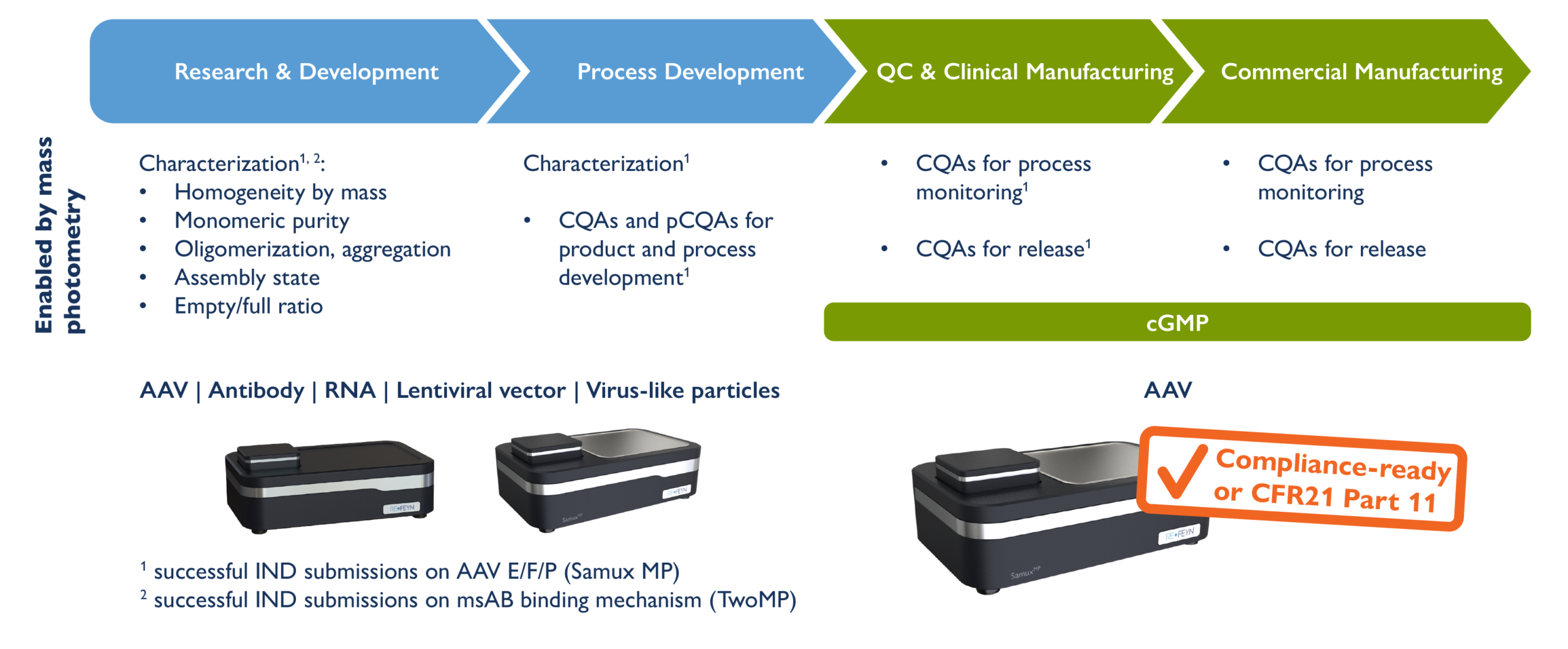
Whether you are working with AAVs, antibodies (monoclonal or multispecific), mRNA, or other complex protein modalities, mass photometry provides powerful, high-resolution analysis of multiple critical quality attributes (CQAs). The related technology, macro mass photometry, provides critical insights about complex samples of adenoviral (AdV) and lentiviral vectors (LVV). Both technologies give you the clarity and confidence to make critical decisions earlier, streamline development and manufacturing, and ultimately improve product quality.
Easy to use, fast, and versatile
See how mass photometry simplifies AAV analysis while maximizing accuracy, flexibility, and efficiency.
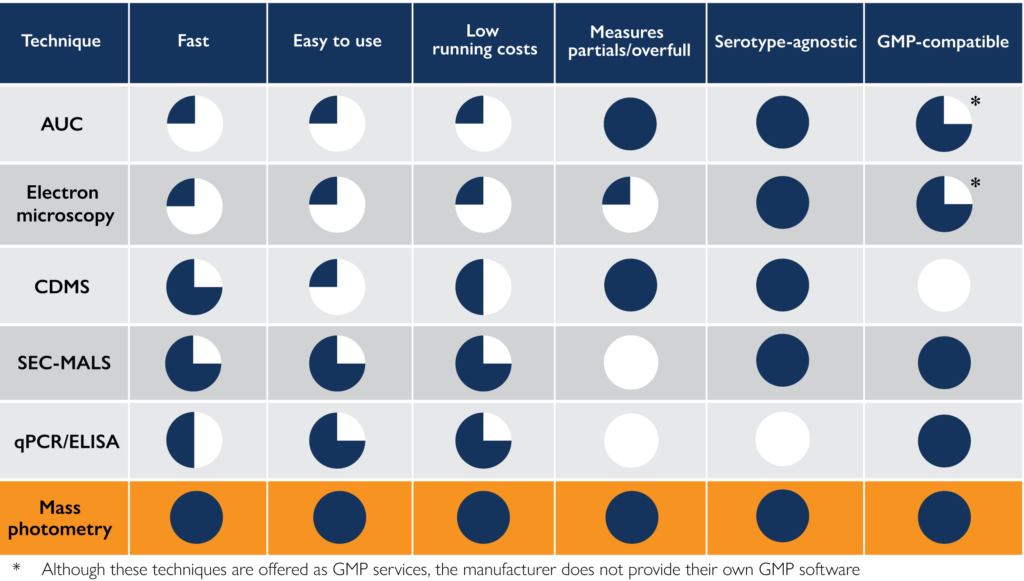
Mass photometry offers key advantages for efficient and reliable AAV analysis:
Simple to operate: Staff can run the system easily with minimal training
Universal protocol: One streamlined workflow across AAVs, antibodies, mRNA, and other proteins
Uses just a droplet (10-20 μL), conserving valuable material
Comprehensive analysis: Multiple CQAs in a single measurement
Rapid results: Quick, actionable insights to support at-line decisions
How much can you save with mass photometry?
The results speak for themselves: Customers are achieving measurable ROI by introducing mass photometry into their AAV workflows, and the table highlights one customer’s findings – comparing the savings achieved relative to AUC.
| Metric | AUC | SEC | Mass photometry |
|---|---|---|---|
|
Samples / Day |
8 |
96 |
42 |
|
Samples / Week |
40 |
480 |
210 |
|
Time / Hours |
8 |
8–10 |
2–3 |
|
Sample requirements |
550 μL @ |
≤100 μL @ |
40 μL @ |
|
Cost savings* relative to AUC |
0% |
16% |
74% |
* Calculation is based on the equipment usage over 5 years, consumables used for each technique and FTE (full time employee) per sample.
GMP-ready tech transfer and support

Complete Solution: Hardware + software, supporting compliance with FDA 21 CFR 11 (US) and EU GMP Annex 11 regulations (Currently available for Samux product line)
Global Reach: Responsive service team providing support worldwide
Validated Software: Guidance for regulated workflows
IQ/OQ Qualification: Performed by Refeyn service engineers, with sample CoCs
Full Documentation: Including IQ/OQ, and instrument and software manuals
Resources to help you make the case
Accelerating GMP quality control with mass photometry from development to release
Discover how MP supports applications across the workflow, from in-process monitoring to impurity and aggregation analysis, and as a critical quality gate before fill-finish.
Adoption Of New Technologies In CGT Manufacturing Challenges And Drivers Adoption of new technologies in CGT manufacturing: challenges and drivers
This expert-led roundtable explores the key factors driving and hindering the adoption of new analytical and process technologies in cell and gene therapy (CGT) manufacturing.
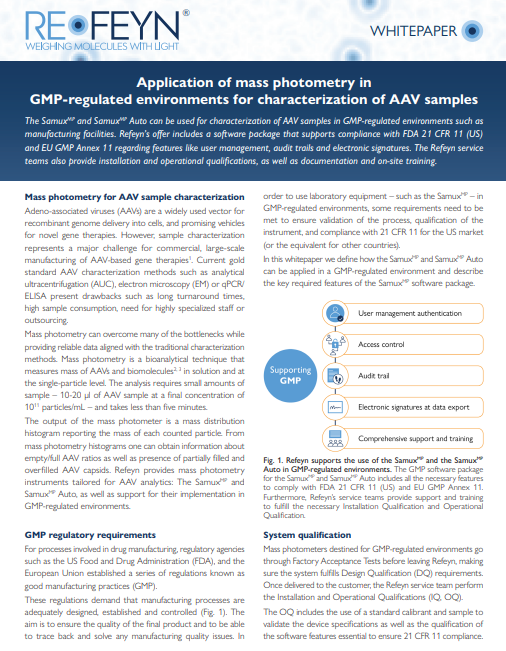
Application of mass photometry in GMP-regulated environments for characterization of AAV samples
This whitepaper details use of the SamuxMP and SamuxMP Auto to characterize AAV samples in GMP-regulated environments, describing features like user management, audit trails and electronic signatures.
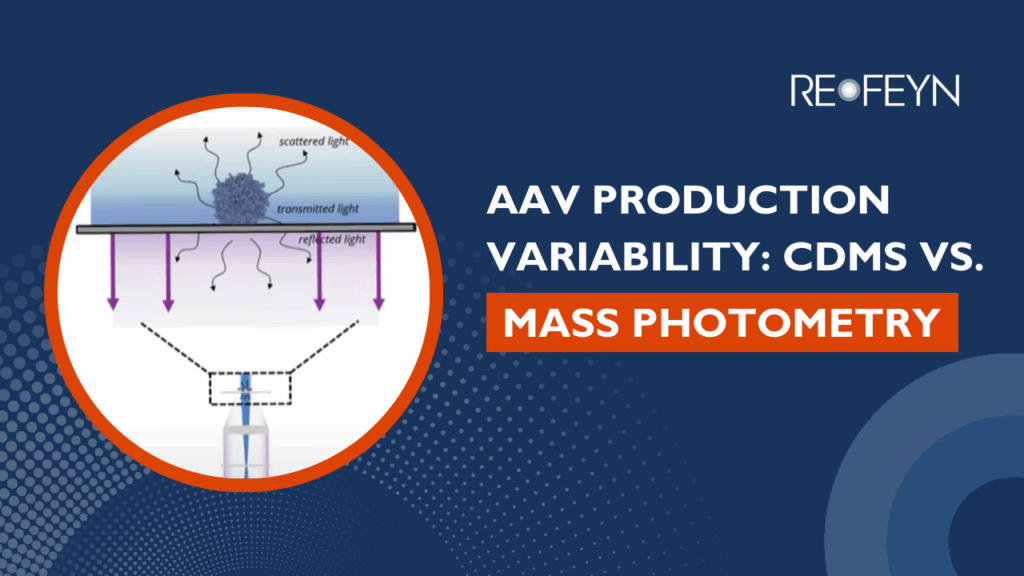
Ready, Set, Quantify: How to Analyze Empty, Full, and Partial AAVs in less than 5 minutes
This short tutorial shows how mass photometry fills a technology gap in AAV analytics by quantifying empty, partially filled, and full AAV capsids – in under five minutes and using only microliters of sample.
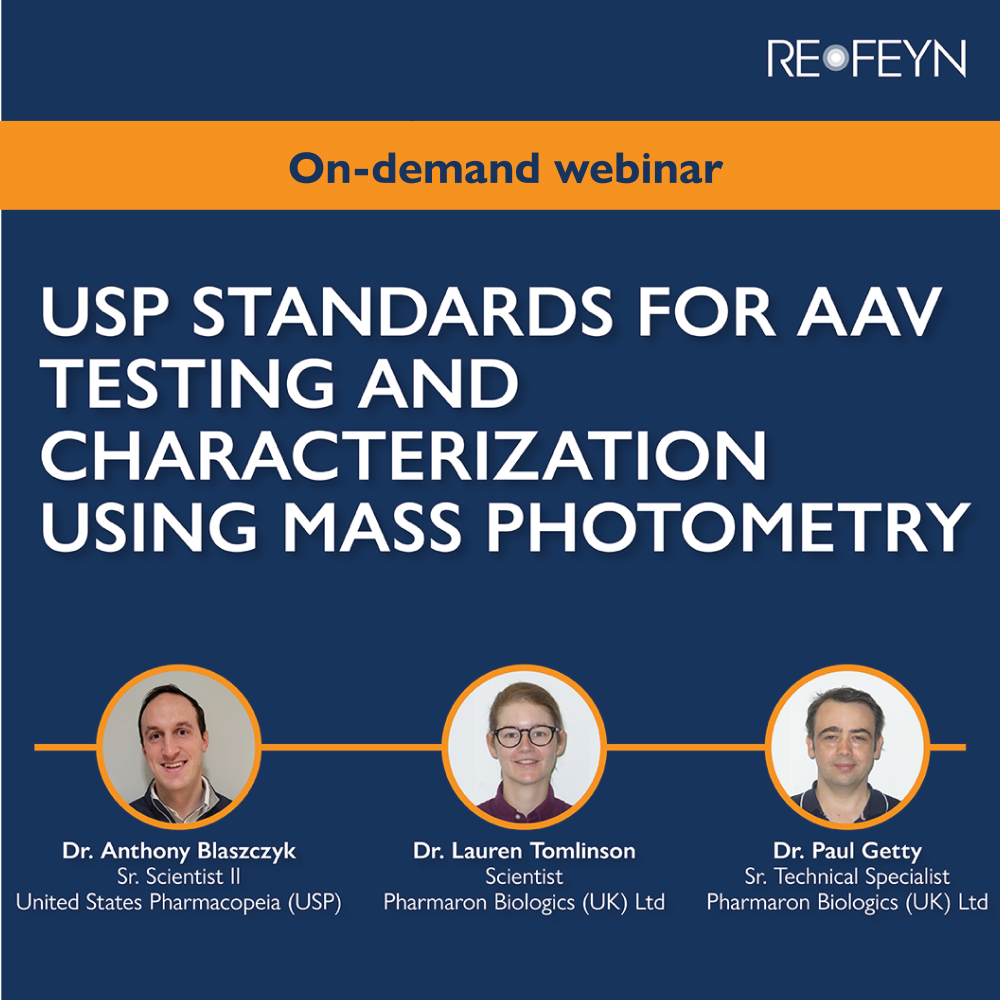
USP AAV standards to support quality testing and characterization
Speakers from USP and Pharmaron present the first USP AAV reference materials available, including standards for empty/full assessment, and the use of MP for rapid process development and controls during large-scale manufacture.
A Modern Tool for Next-Gen Therapeutics
This handbook presents case studies where mass photometry (MP) evaluates antibody aggregation (a key CQA) and antibody binding. The results showcase MP’s strengths for antibody characterization and its advantages over traditional methods, such as size-exclusion chromatography (SEC).
Accelerate mRNA analytics with mass photometry
Discover how cutting-edge mass photometry technology delivers fast, native mRNA analysis for multiple attributes and across a broad range of mRNA sizes.

Quickly and accurately measure key analytical attributes of large vectors with the KaritroMP
This webinar describes how the KaritroMP macro mass photometer provides fast, multiparametric, single-molecule analysis of large viral vectors – making it an ideal tool for process development and manufacturing.
Frequently asked questions
How reproducible are mass photometry (MP) results across sites, operators and instruments?
MP provides highly reproducible results due to:
- Standardized measurement conditions
- Automated data acquisition
- Robust instrument-to-instrument calibration
Multi-site studies have shown consistently low variation in full/empty ratios, aggregate detection, and particle mass measurements, with %CV typically within acceptable limits for QC workflows. With operator training requirements being minimal, results remain stable across users.
Does using MP for AAV analytics reduce the need for outsourced analytical testing (e.g. AUC, TEM)?
Yes. Using MP for AAV analytics can significantly decrease reliance on outsourced AUC and TEM by enabling rapid, in-house measurement of:
- Empty/full/partially-filled/overfilled AAV capsid ratios
- Overall sample purity
Importantly, MP measurements have been shown to align well with AUC & TEM trends for capsid population analysis, making it a reliable tool for routine process monitoring and comparability assessments. While AUC or TEM may still be required for regulatory filing or confirmatory studies, MP provides results fast (in minutes), enabling earlier decision-making and reducing costs and delays related to outsourcing analytics.
What is the expected ROI (time, cost, labor savings) from integrating MP into AAV analytical workflows?
ROI from integrating MP for AAV analytical workflows is typically realized through:
- 80–95% reduction in analysis time compared to AUC/TEM
- Reduced outsourcing costs, including shipping, queue time, and per-sample fees
- Lower labor requirements due to simplified workflows
- Acceleration of process development timelines, especially during optimization cycles
Many teams achieve measurable ROI within months, due to the high volume of in-process samples MP can analyze and the valuable insights obtained. For example, one team reported 74% cost savings with MP compared to AUC.
What validation and qualification support for AAV analytics in GMP environments is available from the mass photometry instrument vendor?
For use with its Samux™ and Samux Auto mass photometers, which are designed for AAV analysis, the instrument vendor (Refeyn) offers a comprehensive qualification package including:
- Installation Qualification (IQ)
- Operational Qualification (OQ)
- Performance Qualification (PQ) support
- Standardized test protocols
- Documentation aligned with 21 CFR Part 11 (if applicable)
- Audit trails, data integrity features, and secure electronic records
This framework ensures the MP technology can be validated and maintained in GMP-regulated environments.
How easily can MP be integrated into existing QC/ GMP-regulated environments for AAV analysis?
MP – together with Refeyn’s software for AAV analytics in GMP-compliant environments – integrates seamlessly because it:
- Requires minimal sample preparation
- Has a small physical footprint
- Runs measurements in minutes
- Supports data integrity and audit-trail requirements
MP workflows fit naturally into AAV QC processes such as batch release, stability studies, in-process control, and comparability testing.
What infrastructure or lab conditions are needed to set up MP?
MP requires:
- A standard benchtop area (no special facility upgrades)
- Temperature-stable laboratory space
- Standard power supply
- Basic IT connectivity for secure data storage and LIMS/ELN integration
No need for specialized expertise, and can be operated in standard laboratory facilities, unlike ultracentrifuges and TEM.
Will regulatory authorities (FDA, EMA) accept MP data as part of analytical comparability or release packages?
Regulators have demonstrated acceptance of MP-generated data in submissions and regulatory interactions. As regulatory agencies continue to encourage modern, science-based analytical approaches, MP aligns well with expectations for improved product understanding, robust control strategies, and risk-based decision-making.
Importantly, there is growing regulatory precedent for the use of MP in AAV characterization, particularly for:
- Quantification of empty, full, and partially filled capsid populations
- Assessment of capsid heterogeneity
- Analytical comparability and stability studies, where sensitivity to subtle population shifts is critical
More generally, regulatory authorities such as the FDA and EMA are increasingly open to the use of new analytical technologies, provided they are scientifically justified, appropriately validated, and clearly positioned within an overall control strategy.
MP is therefore accepted by regulators, provided that:
- The method is fully validated in line with its intended use (e.g., characterization, comparability, in-process control, or supportive release testing), including assessments of accuracy, precision, robustness, and reproducibility.
- The data are presented as part of an orthogonal analytical toolbox, alongside established techniques, demonstrating how MP complements and strengthens understanding of critical quality attributes (CQAs).
- A clear scientific rationale is provided, explaining what MP measures (e.g., capsid mass and empty/full/partial capsid populations), why these attributes are critical, and how MP adds value beyond or alongside existing assays.
- Method limitations and scope are clearly defined, ensuring regulators understand where MP is used for decision-making versus supportive characterization.
What are the validation steps (IQ/OQ/PQ) needed to deploy MP in a GMP lab?
IQ (Installation Qualification)
- Verification of hardware installation
- Software installation and configuration
- Environmental checks
OQ (Operational Qualification)
- Instrument calibration
- Verification of mass accuracy and precision
- Performance of standard test measurements
PQ (Performance Qualification)
- Demonstration of reproducibility using representative AAV samples
- Establishment of method parameters (e.g., acceptance criteria for full/empty ratios)
- Routine performance monitoring procedures
Talk to us about how to add mass photometry to your analytical panel

Let's get started!
If you have any other questions or would like further details, please get in touch!