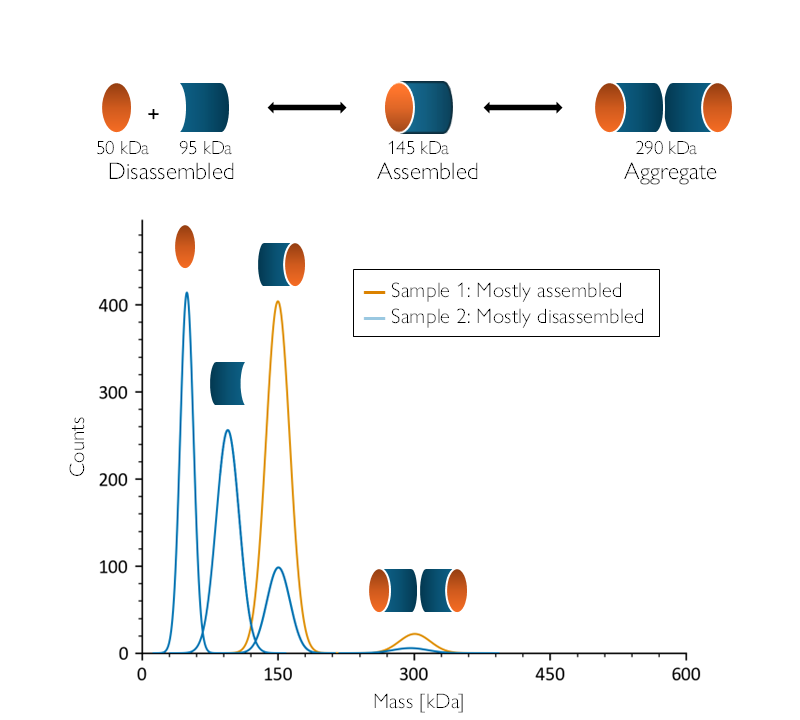
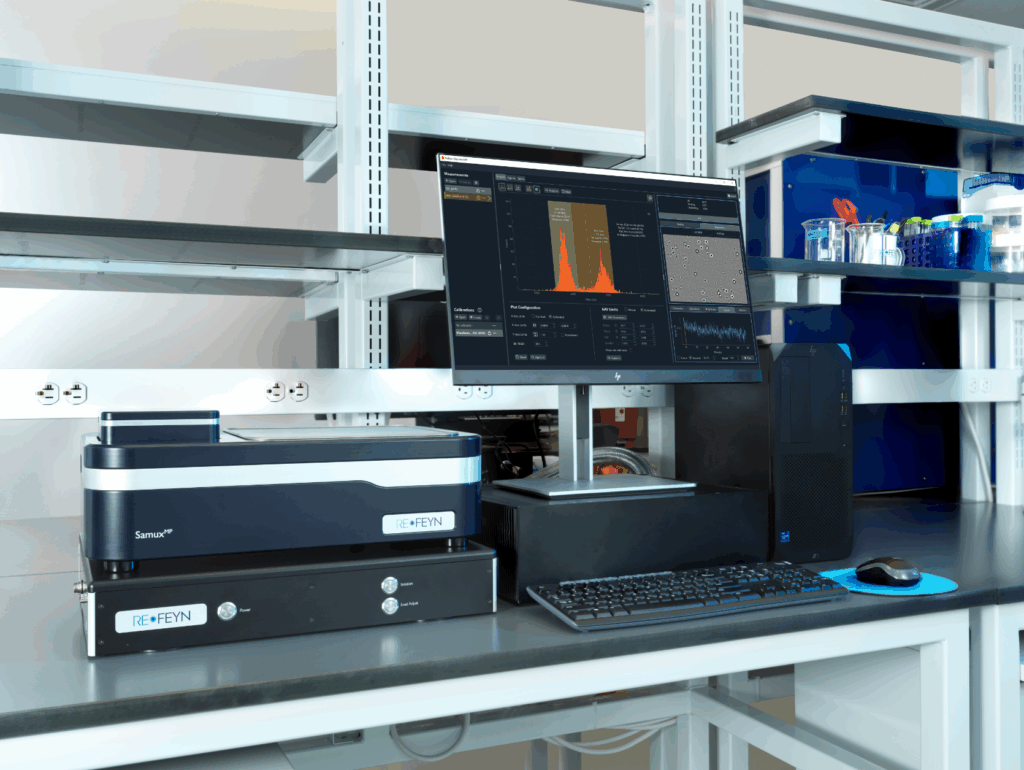
Mass photometry is a novel way to measure the mass of biomolecules. It works by quantifying the light scattered by an individual molecule in solution, which is directly proportional to the molecule’s mass [1], [2] (read more about how mass photometry works).